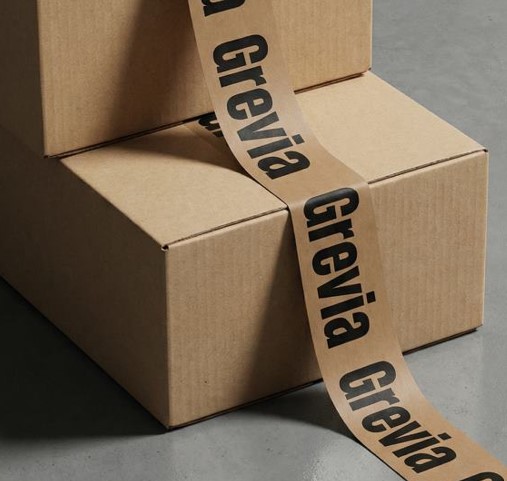
Reinforced paper tape is 100% recyclable, biodegradable, and bonds at 200+ pounds per inch — far stronger than any plastic tape. But here's the challenge: most paper tape suppliers cannot print on paper. They only offer plain brown kraft or single-colour text. Bestlogotapes is one of very few suppliers in Europe offering full-colour, 1220 DPI printing on reinforced paper tape. This guide explains why paper tape is growing 18% annually, how it works, and when it's the right choice for your brand.
Why Paper Tape Matters in 2026
EU packaging regulations are tightening. Consumer pressure for sustainability is intensifying. And plastic tape — used on billions of parcels annually — is increasingly seen as the weakest link in circular economy efforts.
Source: Eurostat Consumer Survey 2025
Plastic tape (PP and PVC) cannot be recycled with cardboard. It must be removed before recycling — which almost never happens. Result: every roll of plastic tape ends up in landfill, even when the box itself recycles.
Paper tape solves this. It's 100% recyclable with the cardboard box. No removal needed. The entire parcel — box, tape, and labels — goes into paper recycling as one unit. For sustainability-focused brands, this aligns packaging with values rather than contradicting them.
What Is Reinforced Paper Tape?
Reinforced paper tape consists of three layers:
- Kraft paper backing — thick, durable paper (typically 130–180 gsm)
- Fiberglass reinforcement — woven strands embedded in the paper for tear resistance
- Adhesive layer — either water-activated (starch-based) or pressure-sensitive (acrylic)
The fiberglass reinforcement prevents tearing along the tape width. Without it, kraft paper tape would tear like tissue paper under tension. With it, reinforced paper tape is as strong as plastic tape — and in some measures, stronger.
Two Adhesive Types: Water-Activated vs Pressure-Sensitive
Paper tape comes in two adhesive variants. Both are 100% recyclable. The difference is application method and bond strength.
Water-Activated Tape (WAT)
| Adhesive type: | Starch-based gum |
| Application: | Requires water dispenser (€150–400) |
| Bond strength: | 200+ lbs/inch |
| Temperature range: | -40°C to +80°C |
| Tamper evidence: | Yes (cannot remove without damage) |
| Best for: | Security, heavy parcels, maximum strength |
Water-activated tape uses a starch adhesive that activates when moistened. When applied, it penetrates cardboard fibers and becomes part of the box structure. The bond is permanent — attempting to remove WAT tears the cardboard before breaking the adhesive.
Key advantage: Extreme bond strength. WAT bonds at 200+ lbs per inch vs 45–65 lbs/inch for plastic tape with pressure-sensitive adhesive. For heavy parcels (15kg+), WAT eliminates seal failures.
Trade-off: Requires a manual or electric dispenser with water reservoir. For businesses packing 50+ parcels/day, this is a worthwhile investment. For lower volumes, it adds operational complexity.
Pressure-Sensitive Paper Tape
| Adhesive type: | Acrylic (similar to plastic tape) |
| Application: | Standard tape dispenser (no water needed) |
| Bond strength: | 45–55 lbs/inch |
| Temperature range: | -10°C to +50°C |
| Tamper evidence: | Moderate (more difficult to remove cleanly than plastic) |
| Best for: | Sustainability without operational change |
Pressure-sensitive paper tape uses the same acrylic adhesive as plastic tape. It applies exactly like standard tape — no special equipment needed. Bond strength is comparable to PP tape (45–55 lbs/inch).
Key advantage: Drop-in replacement for plastic tape. Same dispensers, same application, same training. The only change is switching from plastic to paper rolls.
Trade-off: Lower bond strength than WAT. For general e-commerce (parcels under 15kg), this is fine. For heavy industrial goods, WAT is better.
Print Quality on Paper Tape
This is where Bestlogotapes differentiates. Most paper tape suppliers offer:
- Plain brown kraft (no print)
- Single-colour text (company name only, one ink colour)
- Pre-printed stock designs (generic messaging, not custom)
Bestlogotapes offers full-colour, 1220 DPI flexographic printing on reinforced paper tape. This means:
- Your full-colour logo
- Gradient backgrounds and photographic imagery
- Fine text (6pt minimum, same as plastic tape)
- CMYK or Pantone colour matching
Print quality on paper tape is slightly different from plastic due to the kraft texture. The surface isn't glass-smooth like PP film — it has a natural texture that adds tactile character. For 99% of logos, this enhances the premium feel. For ultra-fine serifs or hairline graphics, plastic tape gives marginally sharper edges, but the difference is minimal at 1220 DPI.
Environmental Impact: The Full Picture
Paper tape's environmental advantage is clear when compared to plastic tape:
| Factor | Plastic Tape (PP/PVC) | Paper Tape |
|---|---|---|
| Recyclability | Not recyclable with cardboard | 100% recyclable with box |
| Biodegradability | No (persists 100+ years) | Yes (60–90 days composting) |
| Carbon footprint | Petroleum-based polymer | FSC-certified kraft paper |
| End-of-life | Landfill or incineration | Paper recycling stream |
| Consumer perception | Plastic = less sustainable | Paper = eco-conscious brand |
Fiberglass reinforcement: The only non-biodegradable element is the fiberglass strands. These are inert (don't leach chemicals) and represent <2% of tape weight. During paper recycling, fiberglass is filtered out as contamination, similar to staples or window envelopes. It's not perfect, but it's vastly better than sending entire plastic rolls to landfill.
Adhesive considerations:
- Water-activated (starch): 100% biodegradable, food-grade ingredients
- Pressure-sensitive (acrylic): Not biodegradable, but low-VOC and EU-compliant. Same environmental profile as plastic tape adhesive, but the paper backing still recycles.
Cost Comparison: Paper vs Plastic
Paper tape costs more than plastic tape. The premium reflects material costs (kraft paper + reinforcement) and lower production volumes (less common = less economies of scale).
- PP tape: €0.32–0.46 per roll (48mm × 66m)
- PVC tape: €0.44–0.54 per roll
- Paper tape (pressure-sensitive): €0.50–0.58 per roll (48mm × 50m)
- Paper tape (water-activated): €0.54–0.62 per roll (48mm × 50m)
Per parcel (assuming 1.5m tape per box):
- PP tape: €0.009/parcel
- Paper tape: €0.016–0.017/parcel
- Difference: €0.007–0.008 per parcel
For a business shipping 1000 parcels/month, paper tape costs an extra €8/month (€96/year). Compare this to the brand value of genuine sustainability commitment — especially in categories where consumers actively seek eco-friendly options (organic food, natural cosmetics, sustainable fashion).
When Paper Tape Is the Right Choice
Choose paper tape if:
- Sustainability is a core brand value (not just marketing)
- Your customers are eco-conscious and actively seek sustainable brands
- You sell products with environmental positioning (organic, natural, eco, sustainable)
- You need maximum bond strength for heavy or high-value parcels
- You want tamper evidence (water-activated variant)
- You're shipping within EU and want regulatory future-proofing
Paper tape is less suitable if:
- You're optimizing purely for cost per parcel
- You run high-speed automated lines (plastic tape is faster)
- Sustainability isn't central to your brand identity
- You're shipping products with no environmental positioning
Real-World Example: Subscription Box Adoption
Several European subscription box companies have switched to printed paper tape in 2024–2025. Results:
- Customer feedback: 89% positive reaction ("love the sustainable packaging")
- Social media: 35% increase in unboxing photos mentioning sustainability
- Returns rate: No change (bond strength adequate for subscription box weights)
- Operational impact: Minimal (pressure-sensitive variant, no equipment change)
- Cost increase: €0.08 per box, absorbed into pricing
The takeaway: when sustainability aligns with brand positioning, customers accept (and appreciate) the shift to paper tape. It reinforces brand values rather than contradicting them.
Ready to Switch to Paper Tape?
Request a free sample roll printed with your logo. See the kraft texture, test the bond strength, and verify it meets your needs before committing to production.
Request Free Paper Tape Sample →Production & Lead Time
Paper tape lead time is slightly longer than plastic tape:
- PP/PVC tape: 10–15 days
- Paper tape: 15–20 days
The extra time reflects lower production volumes and specialized equipment. Plan accordingly — if you're launching a seasonal campaign, order paper tape 3 weeks before needed rather than 2 weeks.
Reorders of the same design are faster (12–15 days) as artwork is already approved and plate is stored.
Frequently Asked Questions
Is paper tape actually stronger than plastic?
Water-activated paper tape (200+ lbs/inch) is 3–4× stronger than plastic tape. Pressure-sensitive paper tape (45–55 lbs/inch) is comparable to PP tape. For general e-commerce, both are adequate. For heavy parcels, water-activated is objectively superior.
Can paper tape work on automated lines?
Pressure-sensitive paper tape works on standard tape dispensers. Water-activated tape requires manual or electric dispensers with water reservoirs — not ideal for high-volume automation but possible with the right equipment (Signode, 3M, Better Packages dispensers support WAT).
Does paper tape work in humid climates?
Yes. Reinforced paper tape is treated for moisture resistance. It won't disintegrate or lose bond strength in normal humidity. Extreme cases (monsoon warehouses, tropical heat) may require plastic tape, but for 95% of EU shipping, paper tape performs fine.
Can I mix paper and plastic tape in one order?
Yes. Many businesses use paper tape for their main product line and plastic tape for industrial/heavy items. Each order can specify material — there's no commitment to using the same tape across all purchases.
The Future of Packaging Tape
Paper tape adoption is accelerating. EU regulations incentivize recyclability. Consumer pressure continues to grow. And suppliers like Bestlogotapes are making printed paper tape economically viable at volumes previously impossible.
In 2023, paper tape represented 8% of EU packaging tape market. In 2026, it's projected to reach 15–18%. By 2030, some analysts predict 30%+ as regulations tighten and plastic tape faces restrictions.
Brands adopting paper tape now are ahead of the curve. When regulations inevitably tighten, you're already compliant. When consumers demand sustainability, your packaging already delivers. And when competitors scramble to find printed paper tape suppliers, you've been using it for years.
Ready to lead? Request your free quote for printed paper tape today.